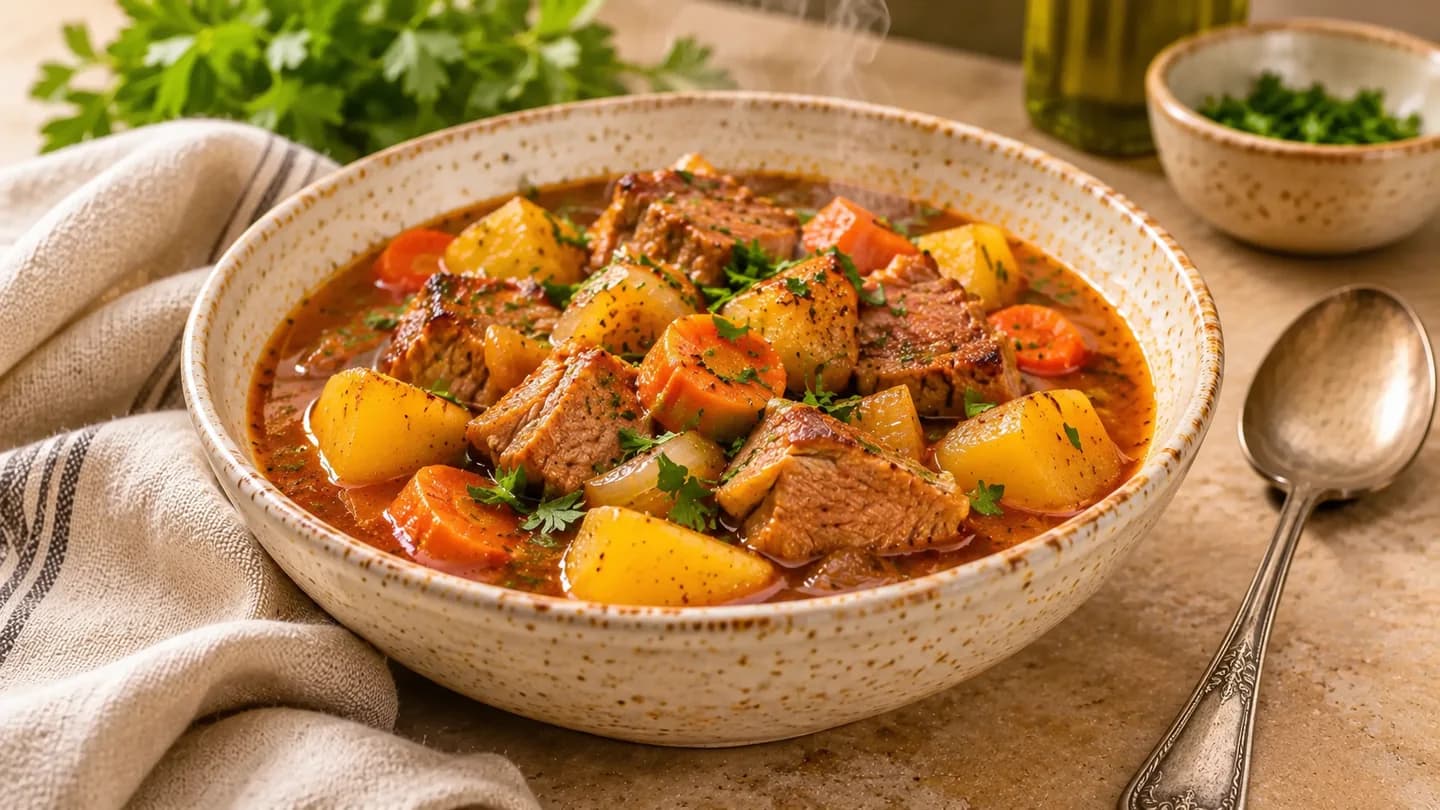
TENDER PORK, POTATOES THAT KEEP THEIR SHAPE
A hearty pork stew that gets the timing right
Good pork and potatoes stew starts with well-browned pork shoulder. The meat gets the slow simmer it needs before Yukon Gold potatoes and carrots join the pot. This keeps the vegetables tender but distinct, while the broth picks up flavor from browned pork, tomato paste, paprika and thyme.
Quick answer: Brown pork shoulder in batches, simmer it gently in broth for about 75–90 minutes, then add potatoes and carrots for the last 25–35 minutes. Finish when the pork is fork-tender and the potatoes are cooked through.
If you like hearty, slow-cooked meals, try crock pot roast with gravy. For a lighter broth-based dinner, see our duck carcass soup.
The recipe
Ingredients
Choose your serving size to scale the ingredients.
STEP BY STEP
How to make pork and potatoes stew
1. Season the pork
Pat the pork shoulder dry and cut into even 1¼-inch cubes. Season lightly with the measured salt and pepper. Dry surfaces brown better than wet ones.
2. Brown in batches
Warm olive oil in a heavy Dutch oven over medium-high heat. Sear pork in two or three batches for about 5–7 minutes per batch, turning to brown several sides. Transfer to a plate; the centers do not need to be cooked yet.
3. Build the flavor base
Lower the heat to medium. Add the onion and cook about 5 minutes until softened. Stir in garlic, tomato paste, paprika and thyme; cook for 1 minute, stirring so the paste darkens without burning.
4. Braise until the pork starts to soften
Pour in the broth and scrape up browned bits. Return pork and any juices to the pot and add the bay leaf. Bring to a gentle simmer, then cover and cook on low for 75–90 minutes, stirring occasionally, until the pork is starting to become tender. Add a splash of water if the liquid drops too far.
5. Add potatoes and carrots later
Add potatoes and carrots only after the pork has softened. Cover and simmer gently for another 25–35 minutes, until the vegetables are tender and the pork can be pulled apart easily with a fork. If the pork is still chewy, continue simmering and check every 10–15 minutes.
6. Adjust the broth
Remove the bay leaf. If you prefer a thicker stew, mash a few potato pieces against the side of the pot, stir and simmer uncovered for 5 minutes. Add hot broth if it is too thick. Stir in vinegar, if using, and taste for salt.
7. Finish and serve
Ladle into warm bowls and scatter with chopped parsley. Let the stew settle for a few minutes before serving; the sauce will thicken slightly as it stands.
THE RIGHT CUT
What cut of pork is best for stew?
Boneless pork shoulder has connective tissue that softens during a long simmer. Pork tenderloin and lean loin chops cook much faster and can turn dry before the broth develops flavor. Trim obvious thick exterior fat but leave some marbling in the shoulder.
THE ORDER MATTERS
When should you add potatoes to pork stew?
First simmer the seared pork for roughly 75–90 minutes. Add evenly cut potatoes and carrots only when it starts softening, then cook another 25–35 minutes. This prevents vegetables falling apart while the pork is still chewy. Timing varies with your pot, cube size and heat.
RICH BUT NOT PASTY
How to thicken pork stew without flour
When the potatoes are fully cooked, gently mash several pieces against the side of the pot. Stir them into the broth and simmer uncovered for about 5 minutes. If it becomes too thick, add a splash of hot stock.
IF THE MEAT IS STILL CHEWY
Why does pork shoulder sometimes need longer?
Pork shoulder can remain firm after the first simmer, especially when cubes are large. Keep a gentle bubble and continue cooking in 10–15 minute intervals until a fork slides through easily. Avoid a rolling boil that can evaporate broth too quickly.
SAFE AND COMFORTING
How can you check pork stew is cooked?
Pork shoulder is simmered considerably longer for tenderness than a lean pork chop. The USDA minimum for whole pork cuts is 145°F (63°C) with a 3-minute rest, but this stew is cooked until the shoulder becomes fork-tender. Always use a food thermometer rather than relying on color alone.
EVEN BETTER THE NEXT DAY
Can you make pork and potato stew ahead?
Yes. Cool promptly and refrigerate in shallow containers. Potatoes continue absorbing liquid overnight, so stir in a splash of stock while reheating. Stir gently to avoid breaking up the vegetables.
SAFE STORAGE
Storing and reheating leftovers
Refrigerate in shallow covered containers within 2 hours of cooking, or within 1 hour when temperatures are above 90°F (32°C). Store at 40°F (4°C) or colder, use within 3–4 days, and reheat leftovers to 165°F (74°C). The stew can be frozen, though potatoes may become grainy.
COMMON QUESTIONS
Pork and potatoes stew FAQs
Why is my pork stew meat tough?
Shoulder needs more gentle cooking. Keep simmering with enough broth until the pork is fork-tender.
How do I keep potatoes from becoming mushy?
Cut Yukon Gold or red potatoes into roughly 1¼-inch chunks and add them near the end, not at the start.
Can I use pork loin instead of shoulder?
This long-braised recipe works best with pork shoulder. Pork loin may become dry during the extended simmer.
Can I make stew thicker without cornstarch?
Yes. Mash a few potatoes into the broth and simmer briefly without the lid.
Can I freeze pork and potatoes stew?
Yes, in airtight portions after rapid cooling, but potatoes can change texture after thawing. Reheat thoroughly to 165°F (74°C).
MORE DINNER IDEAS
More from GoodFoodBakes
Try slow cooker pot roast, baked Italian sausage, duck with pears, or slow cooker biryani for another comforting dinner.