THE SHORT ANSWER
How many calories are in a Vietnamese spring roll?
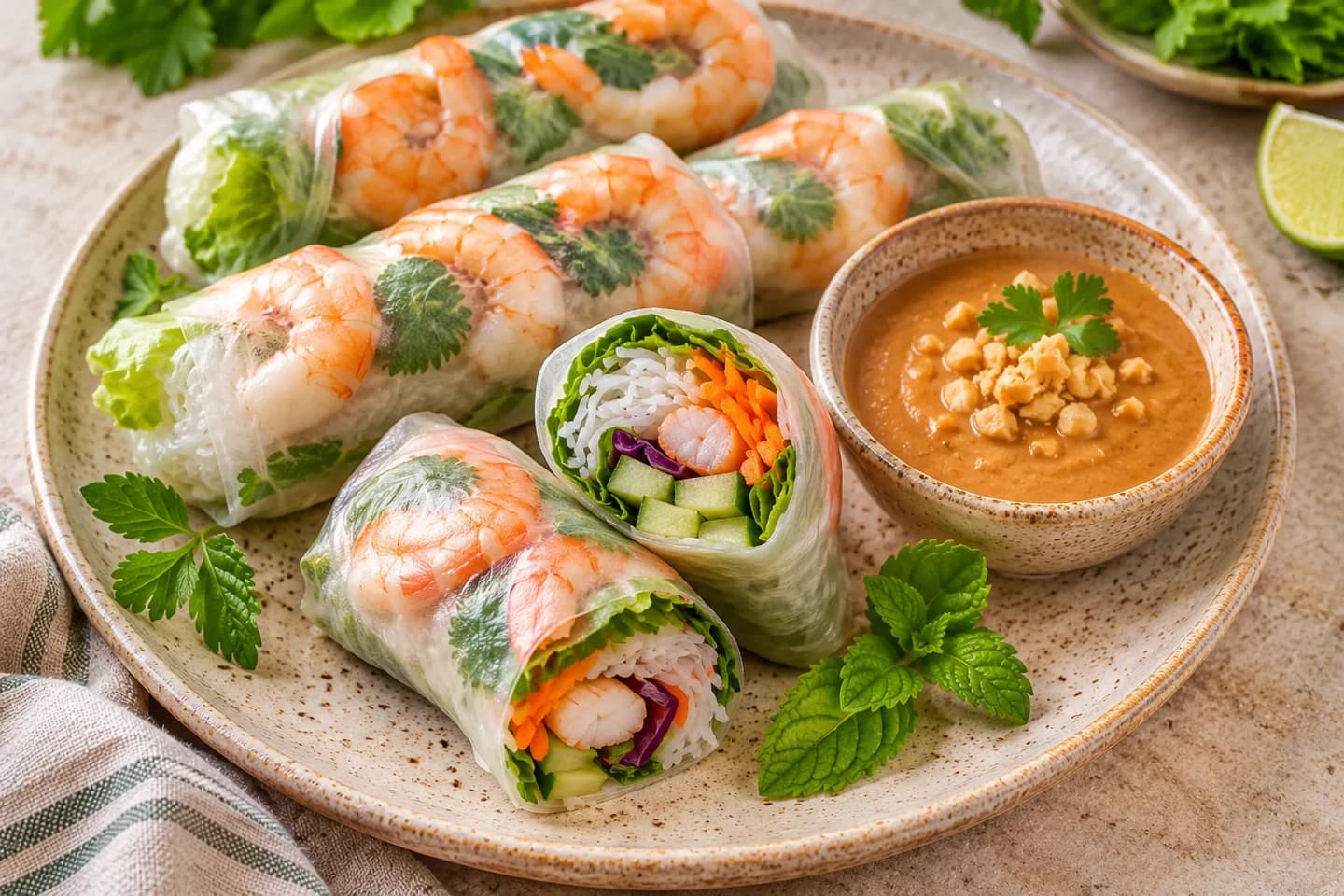
Fresh Vietnamese spring rolls (gỏi cuốn) can vary widely in calories. Published recipes report 70 kcal for a vegetable roll, 90 for a shrimp-and-noodle roll, and 166 for a pork belly and shrimp roll, all before dipping sauce. These are examples, not a universal calorie range. A larger roll or richer filling can contain more.
Two of the 90-calorie shrimp rolls would be 180 calories before sauce. If you consume two tablespoons of a dip labeled 40 calories per tablespoon, the plate becomes 260 calories. Use the calculator below to adapt that arithmetic to your own portion.
BUILD YOUR PLATE
Vietnamese spring roll calorie calculator
Choose a filling, adjust the wrapper and noodle estimates, then enter the sauce you actually eat. The result is an estimate, not a restaurant nutrition label.
Starting amounts are editable examples: 35 kcal wrapper, 35 kcal noodles, 10 kcal vegetables and a hypothetical 40 kcal/tbsp sauce. Set noodles or sauce to zero if omitted. Use your label for other ingredients; include oil or avocado in extras.
110 kcal per roll without sauce · 220 kcal from rolls · 80 kcal from sauce
COMPARE LIKE WITH LIKE
Fresh spring roll nutrition by filling
These figures come from the named recipes. Each row specifies what its serving includes; the recipes use different quantities and should not be treated as a controlled experiment.
| Roll & source | Serving | Calories | Protein | Carbs | Fat |
|---|---|---|---|---|---|
| Vegetable roll NHLBI / NIH | 1 roll; no dipping sauce listed | 70 | 3 g | 16 g | 1 g |
| Shrimp and noodle roll Healthy Nibbles | 1 roll; no sauce | 90 | 6.7 g | 8.6 g | 0.3 g |
| Shrimp and avocado roll Skinnytaste | 1 roll + 1 tbsp sauce; no noodles | 138 | 5 g | 17 g | 6 g |
| Pork belly and shrimp roll Bun Bo Bae | 1 roll; no sauce | 166 | — | — | — |
Values are reproduced as reported by the recipe sources. Some published calories do not reconcile with their listed macros using the usual 4/4/9 kcal-per-gram approximation; differences may reflect rounding, calculation methods or source inconsistencies. Do not use these examples as precise nutrition labels. A dash indicates that comparable unsauced macros were not established.
What about sodium? The NIH vegetable roll reports 28 mg, the Healthy Nibbles shrimp roll 129.3 mg without sauce, and the Skinnytaste shrimp-avocado roll 193 mg with one tablespoon of sauce. Salt, fish sauce and bottled dips can change this substantially.
WHAT GOES INSIDE
Which ingredients change the calories most?
Rice paper and vermicelli
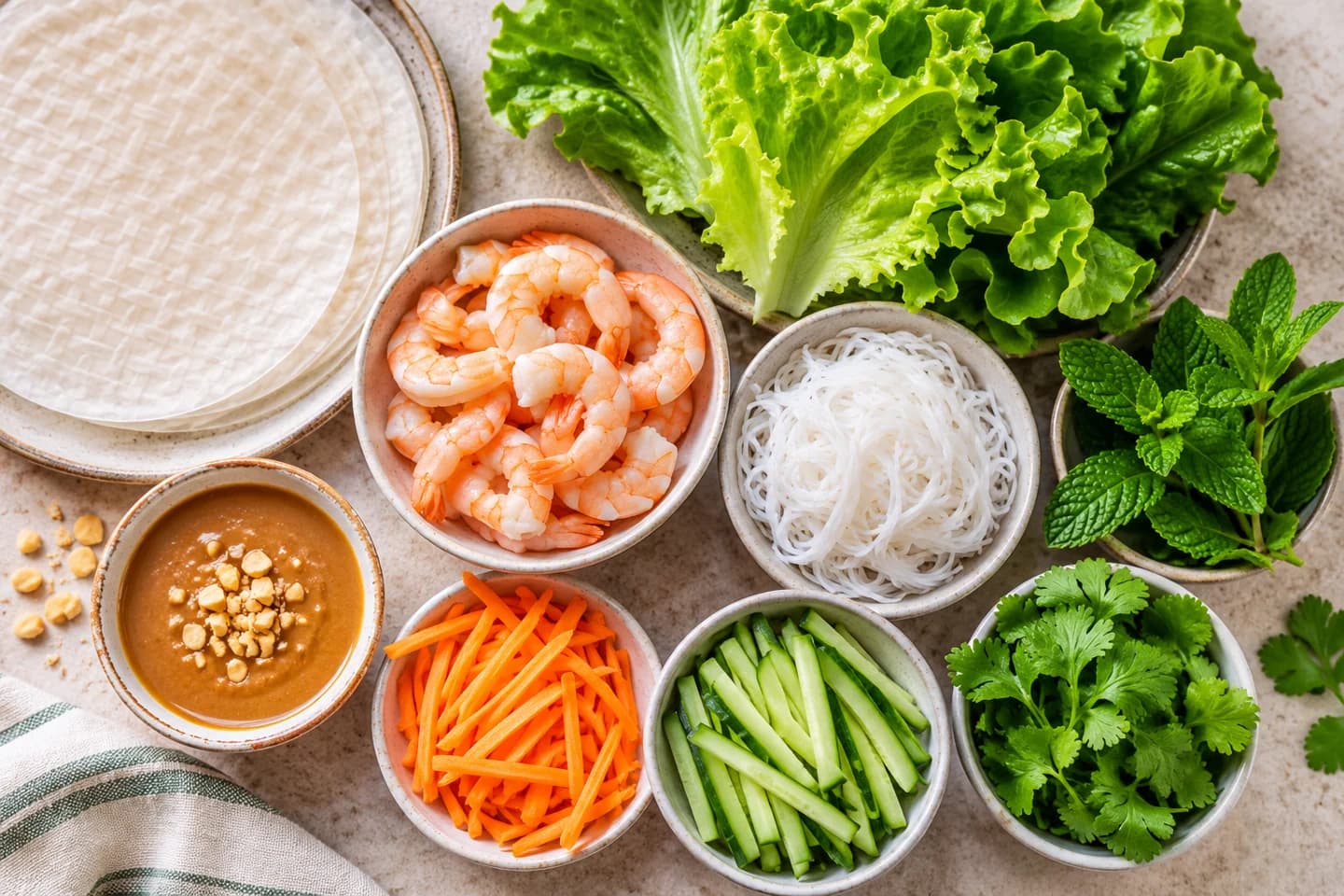
Check the wrapper package for calories per sheet, not per serving if a serving includes several sheets. Noodles add another source of carbohydrate. For homemade rolls, weighing dry vermicelli before soaking is useful because water changes its weight without adding calories. Divide the dry amount among the rolls you make.
Shrimp, chicken, tofu and pork
For the same 30 g portion, reference values of 99 kcal per 100 g cooked shrimp, 165 for roasted skinless chicken breast and 144 for one type of firm tofu imply roughly 30, 50 and 43 calories respectively. Tofu brands and cooking methods vary. A pork belly roll is a different proposition from a lean pork roll; use the actual meat label or a matching food database entry.
Vegetables and herbs
Cucumber, lettuce, mint and other fresh herbs add bulk and flavor. Carrots and bean sprouts add crunch. Avocado and cooking oil contribute more energy than an equivalent weight of many leafy vegetables, so enter them separately if your roll contains them.
THE DIP COUNTS TOO
How many calories does dipping sauce add?
Peanut-hoisin sauce is often made with peanut butter and sweetened hoisin; nước chấm is typically a mixture of fish sauce, lime, water, sugar and seasoning. Both vary by recipe, and a small serving of a rich sauce may contain less energy than a much larger serving of a lighter one. Fish sauce can also contribute considerable sodium.
| Amount actually eaten | Added calories | Two 90-calorie rolls + sauce |
|---|---|---|
| 0 tbsp | 0 | 180 |
| 1 tbsp | 40 | 220 |
| 2 tbsp | 80 | 260 |
| 3 tbsp | 120 | 300 |
This table uses a hypothetical sauce label to show the effect of portions. Check your own sauce label or recipe; peanut butter by itself is not nutritionally equivalent to diluted peanut dipping sauce.
TWO DIFFERENT DISHES
Fresh vs. fried Vietnamese spring rolls
| Type | Calories per roll | Source and serving |
|---|---|---|
| Fresh shrimp | 90 | Healthy Nibbles · no sauce |
| Fresh pork belly & shrimp | 166 | Bun Bo Bae · no sauce |
| Fried pork & shrimp | 123 | Bun Bo Bae · 1 egg roll |
Fresh gỏi cuốn are usually wrapped in softened rice paper and served without frying. Chả giò are crisp fried rolls, with fillings and wrappers that differ by household and region. Oil adds energy during frying, but a small fried roll can weigh much less than a large fresh roll. Compare the same weight or the actual number of rolls you will eat, and use restaurant nutrition information when it is available.
As an illustration, 5 g of absorbed oil would add about 45 calories to a roll. That is an arithmetic example, not an estimate of how much oil a particular fried roll absorbs.
WHEN YOU EAT OUT
How to estimate restaurant spring rolls
Using the 90-calorie shrimp example: 180 kcal plain, 220 kcal with 1 tbsp of a 40-kcal sauce, or 260 kcal with 2 tbsp. Count sauce once for the whole plate, not for every roll.
First check whether the menu item is fresh or fried, then count the whole rolls (some are cut into two pieces). Ask whether the nutrition information includes dipping sauce. If you cannot find a reliable restaurant-specific figure, use the published examples as a starting point and adjust for filling and portion. For shared sauce, estimate what you personally ate, not what the restaurant served to the entire table.
For a lunch or dinner, consider the rest of the plate as well. A roll with a small amount of shrimp may contain considerably less protein than a larger chicken or tofu roll. Add protein, vegetables or other sides according to your appetite and preferences rather than treating one calorie number as a health score.
COMMON QUESTIONS
Vietnamese spring roll nutrition FAQs
How many calories are in two shrimp summer rolls?
Two rolls from the 90-calorie Healthy Nibbles example total 180 calories without sauce. Your portion may differ.
Are rice paper rolls gluten-free?
Many rice paper wrappers contain rice or tapioca, but verify the wrapper, fillings, and sauces on their labels. Hoisin and soy sauce may contain wheat, and restaurant cross-contact matters for people who must avoid gluten.
How much protein is in one shrimp spring roll?
The two shrimp examples above report about 5–6.7 g protein per roll; quantities vary with the shrimp and other ingredients. A roll with 30 g cooked shrimp alone provides about 7 g protein before other ingredients.
Are fresh spring rolls healthy?
They can offer vegetables, herbs, carbohydrates and protein, depending on filling. Sodium, allergens, sauce portions and the rest of your meal also matter. No single food has a universal health rating.
What if I am allergic to peanuts or shellfish?
Check all ingredients and ask about cross-contact. Fish sauce, shrimp, peanuts, soy and wheat may be present in the rolls or dips, depending on the recipe. A different dipping sauce is not automatically safe.
WHERE THE NUMBERS COME FROM
Nutrition sources and estimation notes
The comparison above links to the original published recipes. The calculator uses editable example amounts, reference food composition values and your own sauce and wrapper label. Its output is rounded and is not laboratory-tested nutrition information.
- USDA FoodData Central: cooked shrimp (99 kcal per 100 g).
- USDA FoodData Central: roasted chicken breast, meat only (165 kcal per 100 g).
- USDA FoodData Central: firm tofu, prepared with calcium sulfate (144 kcal per 100 g).
- Wrapper, noodle, vegetable and sauce defaults are illustrative inputs; replace with your package or recipe values.
Food composition depends on brand, preparation and portion. For medical nutrition needs, use the advice of a qualified clinician or dietitian and the most accurate product information available.
MORE FROM GOOD FOOD BAKES
More fresh appetizer ideas
Explore our vegetable avocado wraps, green beans and tomatoes salad or apple and pineapple salad.