SOFT DOUGH, SPICED APPLE FILLING
A sweet roll worth baking slowly
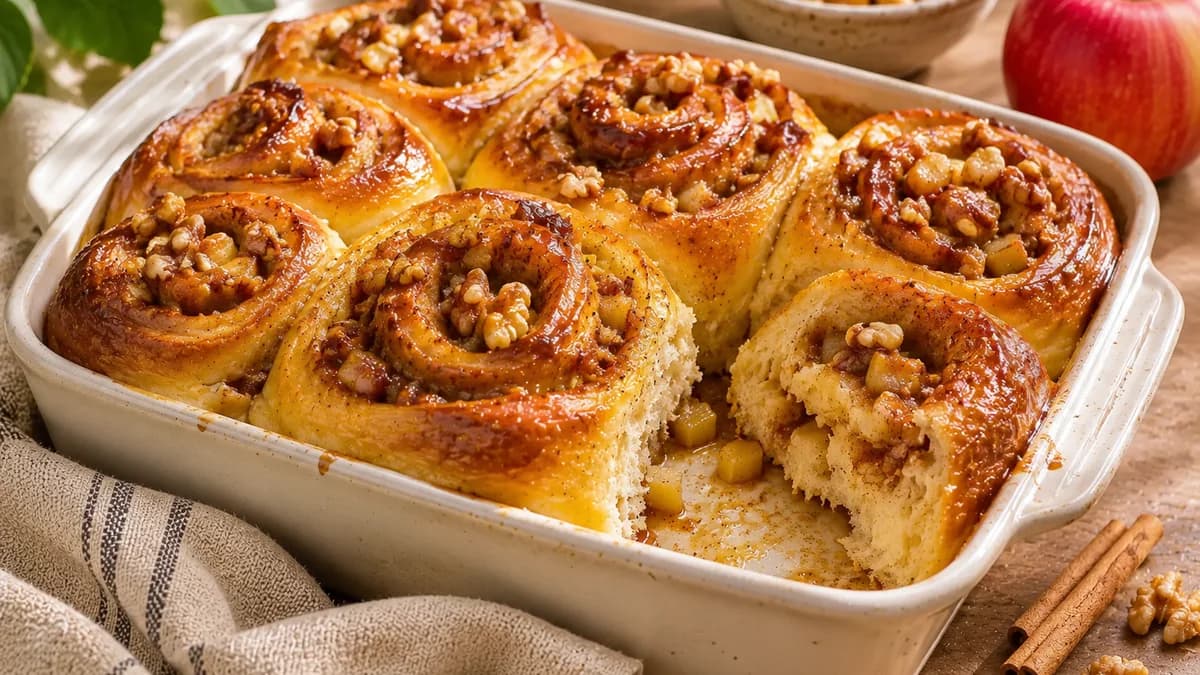
These Alpine-style sweet rolls start with a tender milk-and-butter yeast dough. A thick apple-cinnamon filling adds gentle sweetness, and chopped walnuts bring crunch. Cooking the filling before rolling helps avoid wet centers and leaking fruit juice.
Quick answer: Knead a soft yeast dough and let it double. Cook and cool the apple filling, roll the dough into a log, slice into spirals, let them rise again, then bake at 350°F (175°C) for about 22–28 minutes until golden.
The name “Alpine rolls” describes different types of baked goods. This is an original Good Food Bakes filled-sweet-roll interpretation, not a claim that one recipe represents every Swiss or Alpine bread tradition.
For more apple-and-cinnamon baking, try cinnamon apple cheesecake. If you want an easy breakfast pastry, make puff pastry turnovers.
The recipe
Ingredients
Choose your serving size to scale the ingredients.
STEP BY STEP
How to make Alpine rolls
1. Mix the soft yeast dough
Whisk the flour, instant yeast, sugar and salt in a large bowl. Pour in lukewarm milk and add the softened butter. Mix to a shaggy dough. The milk should feel comfortably warm, not hot; about 100–110°F (38–43°C) is a useful range.
2. Knead until smooth and elastic
Knead for 8–10 minutes by hand or 6–8 minutes with a dough hook. The dough should be soft and slightly tacky, not wet or crumbly. Resist adding lots of extra flour: it can make the baked rolls dense.
3. Let the dough rise
Place in a lightly oiled bowl, cover and let rise in a warm place until roughly doubled, about 60–90 minutes. Use the size of the dough rather than only the clock; cool kitchens need longer.
4. Cook the apple-cinnamon filling
While the dough rises, cook the finely diced apples with butter, brown sugar, cinnamon and cornstarch over medium heat for 6–8 minutes, stirring until the apples soften and the juices thicken. Stir in the chopped walnuts if using. Spread the filling on a plate and cool completely before shaping.
5. Roll, fill and slice
For 8 rolls, roll the risen dough into roughly a 12 × 10-inch rectangle. Spread cooled apple filling evenly, leaving a ½-inch clean border. Roll up from the longer side, pinch the seam closed, and slice into 8 pieces with a serrated knife or plain dental floss. For 16 rolls, work with two equal dough portions.
6. Proof the shaped rolls
Arrange the rolls cut side up in a lightly buttered 9-inch round or similar baking pan, allowing some space. Cover and let rise until puffy, about 35–45 minutes. Toward the end, preheat the oven to 350°F (175°C).
7. Bake until golden and cooked through
Bake for about 22–28 minutes, until the tops are golden and the centers are set. A thermometer in a bready part of a center roll can read around 190°F (88°C). If the tops brown too quickly, tent loosely with foil.
8. Cool slightly and finish
Set the pan on a rack for 10–15 minutes. For a simple glaze, whisk powdered sugar with milk until drizzleable and spoon over warm—not piping hot—rolls. Serve while soft, and cool fully before storing.
A FILLING THAT STAYS INSIDE
Why cook the apples first?
Raw apple releases moisture as it bakes and can leave a soft, gummy center. Cooking finely diced apples with butter, brown sugar, cinnamon and a little cornstarch makes a thick filling that spreads evenly. Cool it completely before spreading so the yeast dough stays firm enough to shape.
A SOFTER CRUMB
How to keep sweet yeast rolls soft
Weigh the flour if possible and avoid adding handfuls during kneading. A slightly tacky dough is normal. Let the first rise finish before rolling it out, then give the shaped spirals a second proof until puffy. Dough rise times change with room temperature.
GOLDEN, NOT DRY
How to tell when Alpine rolls are done
Bake at 350°F (175°C) until the center rolls look set and the tops turn golden. A thermometer inserted into a bready area—not the fruit filling—can read around 190°F (88°C). The center rolls usually take longer than the ones against the edge of the pan.
SMALL BATCH OR A CROWD
Make 4, 8 or 16 Alpine rolls
Use the serving selector above for precisely adjusted ingredient quantities. For 4 rolls, use a small pan. For 8, a 9-inch round pan works well. For 16, split the dough and cooled filling between two pans, with enough room for the second rise. Baking time can vary with pan size and thickness.
MAKE AHEAD AND LEFTOVERS
How to store and reheat the rolls
These taste best the day they are baked. Store cooled rolls covered at room temperature for 1–2 days, or freeze unglazed for longer. To prepare ahead, cover shaped rolls and refrigerate overnight, then let them become visibly puffy before baking. Warm leftovers gently and glaze just before serving.
COMMON QUESTIONS
Alpine rolls FAQs
Are Alpine rolls a traditional Swiss recipe?
The name is used for more than one kind of roll. Some recipes refer to plain Alpine bread rolls; this is Good Food Bakes' original sweet filled-roll interpretation, not a claim of historical authenticity.
Can I make the rolls the night before?
Yes. Shape, cover and refrigerate overnight. The next day, let them stand until visibly puffy and bake as directed. Cold dough can need more proofing time.
Why are my rolls dense?
Excess flour, insufficient kneading or a short rise can cause a dense crumb. Aim for a soft, slightly tacky dough and watch its volume rather than relying on a strict timer.
How do I stop the filling from leaking?
Cook the apples until the juices thicken, cool fully and keep a clean border at the edge before rolling and pinching the seam.
Can I freeze Alpine rolls?
Yes. Cool them fully and freeze without glaze in airtight portions, then thaw and gently rewarm before serving.
MORE TO BAKE
More from Good Food Bakes
Try cream cheese puff pastry turnovers, berry croissant cake or see what to use instead of maple syrup for glazes and toppings.